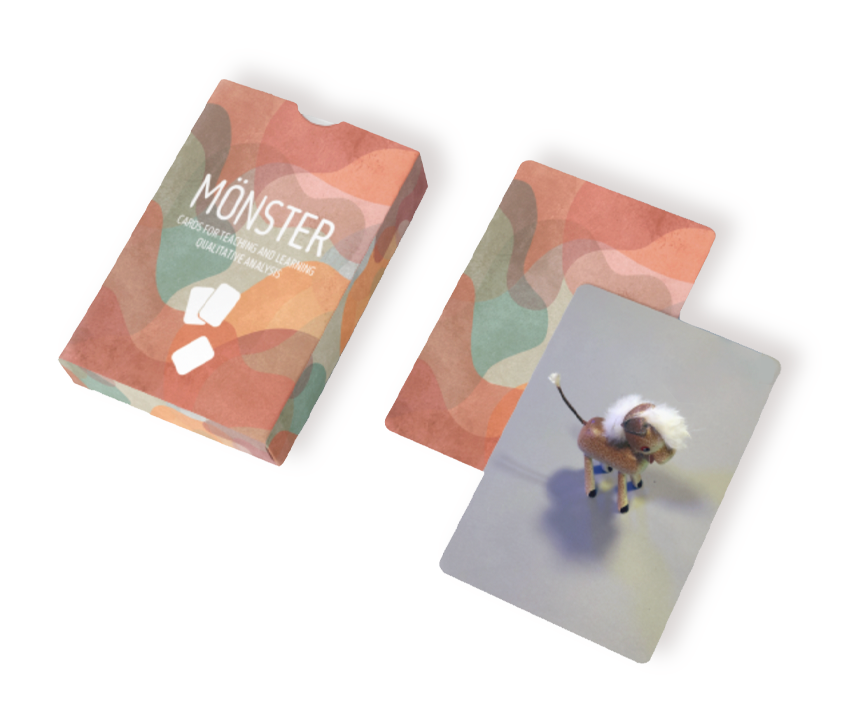

Recognising patterns is a fundamental human ability; it is how we make sense of the world around us. Research is no exception. This deck of cards offers a playful way of introducing what pattern-making can involve, as well as the challenges it entails. One important insight is that patterns are something we generate, not least through language and the way we name things. Critical discussion within a group is an important resource in this process, as is the iterative approach – trying things out, reconsidering, and gradually refining!
Since Braun and Clarke published their article Using thematic analysis in psychology in 2006, thematic analysis has become a central, and often introductory, analytical method in qualitative research. At a general level, thematic analysis involves identifying – or generating, to use Braun and Clarke's terminology – patterns. Patterns are meaningful and central elements of the data, identified and interpreted (named) through an active and critical analytical process. A pattern is something that recurs, something that captures a meaningful aspect of what is recurring, and something that we can name (put into words). These patterns, or themes, then collectively provide a possible answer to the research question. Braun and Clarke themselves write:
A theme [pattern] captures something important in the data in relation to the research question, and represents some level of patterned response or meaning within the data set. [2006:82]
Thematic analysis can be described in more detail as a six-step process:
For more information about thematic analysis: www.thematicanalysis.net
What we particularly want to emphasise with this deck is the importance – and the complexity – of being thorough from the very first steps of the process. Conducting a thematic analysis requires patience, (self-)critical reflection, and, not least, a willingness to engage in an iterative process.